
Remedial Massage vs Myotherapy: What’s the Difference and Which One Do You Need?
remedial massage vs myotherapy; If you’ve been searching for help with muscular pain or tension, you’ve probably come across both “remedial massage” and “myotherapy” — and wondered what the difference is. They sound similar, they often happen in the same clinic, and they can even feel similar on the table. So how do you know which one is right for you?
The short answer: it’s not about pressure or intensity. It comes down to scope — how broadly your therapist assesses and treats what’s going on. Here’s a clear, honest breakdown to help you choose.
What Is Remedial Massage?
Remedial massage is a targeted, hands-on therapy that assesses and treats muscles, tendons, and connective tissue contributing to pain, tightness, or restricted movement. A remedial therapist assesses your symptoms and applies specific soft-tissue techniques — such as deep tissue work, trigger point therapy, and myofascial release — tailored to you rather than a fixed routine.
In Australia, remedial massage therapists typically hold a Diploma of Remedial Massage, which trains them to carry out a musculoskeletal assessment, design an individual treatment plan, and — importantly — recognise when something falls outside their scope and needs referral to another health professional. (If you’d like a deeper look at the research behind it) Remedial Massage
What Is Myotherapy?
Myotherapy builds on top of remedial massage. In fact, in Australia, qualifying as a myotherapist means first completing the remedial massage qualification, then going further with an Advanced Diploma of Myotherapy or a Bachelor of Health Science (Clinical Myotherapy).
That additional training expands what a myotherapist can do. Beyond hands-on soft-tissue work, myotherapy involves a more comprehensive clinical assessment — including orthopaedic testing and movement analysis — aimed at identifying not just where you hurt, but why. Your pain might show up in your hip, for example, while the real driver sits in your lower back, your pelvic mechanics, or a movement pattern you’re not even aware of. Myotherapy Brunswick
Myotherapists are also trained in a broader set of treatment tools, which can include dry needling, cupping, joint mobilisation, and corrective exercise prescription, depending on what your presentation calls for.
The Key Difference: Scope, Not Strength
This is the biggest misconception worth clearing up: remedial massage vs myotherapy massage & myotherapy for injury management
myotherapy isn’t simply “remedial massage with firmer pressure.” A skilled remedial therapist can absolutely work deeply and effectively.
The real difference is in the breadth of assessment and the range of treatment options. Remedial massage is focused primarily on the soft tissue contributing to your symptoms. Myotherapy widens the lens to look at the underlying biomechanics and root causes and brings additional techniques to the table for more complex or persistent issues.
Here’s a simple way to picture it:
| Remedial Massage | Myotherapy | |
| Focus | Soft tissue causing pain and tension | Root causes of musculoskeletal dysfunction |
| Assessment | Musculoskeletal assessment | Broader clinical assessment, including orthopaedic and movement testing |
| Techniques | Deep tissue, trigger point, myofascial release, stretching, can include cupping & dry needling if trained. | All of the above, plus dry needling, cupping, joint mobilisation, corrective exercise |
| Qualification | Diploma of Remedial Massage | Advanced Diploma or Bachelor (remedial massage is a prerequisite) |
| Best suited to | Tension, tightness, recovery, more straightforward muscular issues | Chronic, recurring, referred, or complex pain |
It’s worth noting that neither profession is regulated by AHPRA in the way that physiotherapy is. Both operate under established professional associations such as Massage & Myotherapy Australia, which set education and practice standards — so whichever you choose, look for a qualified, accredited practitioner.
Which One Should You Choose?
The good news is you don’t have to get this perfectly right on your own — a good clinic will guide you. But here’s a useful starting point. 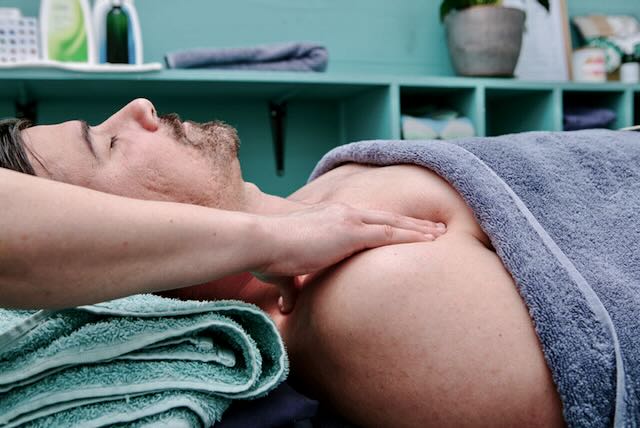
Remedial massage may suit you if your issue is muscular and relatively straightforward: a tight or sore area, tension from work or training, a stiff neck, or general recovery support. If you want targeted hands-on treatment for a clear muscular complaint, remedial massage will often give you exactly what you need.
Myotherapy may suit you if your pain is chronic, keeps coming back, involves referred pain or several areas at once, or hasn’t responded well to massage alone. If you suspect there’s something biomechanical driving the problem — not just tight muscles, but the reason they keep getting tight — a myotherapist’s broader assessment and treatment scope is likely the better fit.
And if you’re genuinely unsure? That’s completely normal, and it’s not a decision you need to agonise over. Many people start with one and adjust based on how their body responds. The most important factor isn’t picking the “perfect” label — it’s finding a practitioner who listens, explains their approach clearly, and works with you toward your goals.
A Note on What These Therapies Are — and Aren’t
Both remedial massage and myotherapy can be valuable parts of managing muscular pain and supporting how you move and feel. Neither is a replacement for medical care. If you have a serious or undiagnosed health concern, persistent or worsening pain, or a specific medical condition, please speak with your GP first — and a good therapist will refer you on whenever something sits outside their scope.
Frequently Asked Questions
Is myotherapy better than remedial massage? Neither is “better” — they’re suited to different needs. Remedial massage is ideal for more straightforward muscular issues, while myotherapy’s broader scope can be more appropriate for complex, chronic, or recurring pain.
Can I claim both on private health insurance? Often, yes — provided your therapist is accredited and your extras cover includes that service. Remedial massage and myotherapy are usually listed separately by health funds, so check which one your policy covers.
Do I need a referral to see a myotherapist? No. You can book a remedial massage or myotherapy appointment directly, without a GP referral.
Will a myotherapy session feel different to a massage? It may include more assessment at the start, and the treatment might incorporate techniques beyond hands-on massage — such as dry needling or some corrective movement advice — depending on what you need that day.
Not Sure Which Is Right for You? We Can Help
At Verdelab Remedial Massage and Myotherapy in Brunswick East, our qualified therapists offer both remedial massage and myotherapy, along with pregnancy massage, dry needling, and lymphatic drainage. If you’re not sure which is the best starting point, we’re happy to talk it through and recommend an approach suited to your body and your goals.
Book an appointment easily online or get in touch with our friendly team on Lygon Street today.
