
Massage for knee pain; how can we help? If your knees have been slowing you down — whether it’s a dull ache after a long day, stiffness first thing in the morning, or that familiar twinge on the stairs — you’re far from alone. Knee pain is one of the most common complaints we see in clinic, and it can be genuinely exhausting to live with. The good news? Massage therapy is one of the most effective, drug-free tools available to help, and the science behind it is more compelling than many people realise.
Why Knees Are So Vulnerable
The knee is a remarkable but demanding joint. It carries roughly 2.5 to 3 times your body weight with every step you take — and up to 7–8. 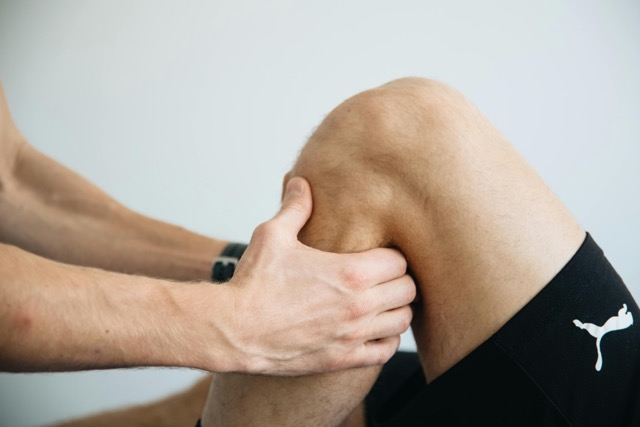 times your body weight when you climb stairs or squat. It’s supported by a complex network of muscles, tendons, ligaments, and bursae, all of which are susceptible to overuse, injury, and the gradual wear of everyday life.
Conditions like osteoarthritis, patellofemoral syndrome (runner’s knee), IT band syndrome, and general muscle tightness in the quadriceps and hamstrings can all contribute to knee pain. Even desk workers suffer — prolonged sitting tightens the hip flexors and weakens the glutes, placing extra strain on the knee joint over time.
How Massage Helps Knee Pain — The Science
Massage works on multiple levels to address knee pain, and research supports its role as a genuine therapeutic tool, not just a feel-good luxury.
Reduces inflammation and swelling. A landmark study published in the Annals of Internal Medicine (2011) found that patients with knee osteoarthritis who received regular Swedish massage experienced significant reductions in pain and stiffness, and improved function — even compared to those who received light touch therapy. Massage helps stimulate lymphatic drainage, which reduces fluid buildup around the joint. pain and the knee
Releases muscular tension that loads the knee. Tight quadriceps, hamstrings, calf muscles, and the iliotibial (IT) band can all pull the knee out of alignment or compress the joint. Targeted soft tissue work releases these structures, restoring balance and reducing the mechanical stress that drives pain. Remedial Massage
Improves circulation. Massage increases local blood flow, which delivers oxygen and nutrients to inflamed or damaged tissue and helps flush out metabolic waste products — accelerating the body’s natural healing process.
Reduces pain signals through the nervous system. One of the most fascinating aspects of massage therapy is its neurological effect. Therapeutic touch triggers the release of endorphins and serotonin — your body’s natural painkillers — and activates the gate control theory of pain, essentially “closing the gate” on pain signals travelling to the brain.
What a Massage Session for Knee Pain Looks Like
A tailored massage for knee pain isn’t just about working on the knee itself. A skilled therapist will assess the whole picture — your posture, movement patterns, and the muscles above and below the knee that influence how it functions.
Treatment typically includes:
- Deep tissue work on the quadriceps and hamstrings to relieve tension pulling on the kneecap and joint
- Myofascial release along the IT band and hip abductors
- Targeted work around the knee joint itself, including the patellar tendon, medial and lateral joint lines, and the popliteal area behind the knee
- Gentle mobilisation to restore range of motion
- Calf and tibialis anterior work to address tension from below
The result is a comprehensive treatment that addresses root causes, not just symptoms.
Who Can Benefit?
Massage for knee pain can be enormously helpful for:
- People with osteoarthritis looking for non-pharmaceutical pain management
- Runners and cyclists dealing with IT band syndrome or patellofemoral pain
- Those recovering from minor knee injuries or post-surgical rehabilitation (with GP clearance)
- Anyone experiencing general knee stiffness and aching from prolonged sitting or standing
- Older adults wanting to maintain mobility and independence
If you’re unsure whether massage is right for your specific condition, it’s always worth a conversation — we’re here to listen and guide you.
A Note on What to Expect
It’s completely normal to feel some tenderness during treatment, particularly when working on tighter areas. Your therapist will always work within your comfort level and check in regularly. Many clients notice a meaningful reduction in pain and improved movement within just a few sessions — and for ongoing conditions like osteoarthritis, regular maintenance massage can make a real difference to quality of life.
Ready to Take the Next Step?
Living with knee pain doesn’t have to be your normal. Whether your discomfort is new or has been building for years, massage therapy offers a safe, evidence-based path toward feeling better — and moving more freely.
Book your appointment today and let’s work together to get you back to doing the things you love.
Always consult your GP or healthcare provider if you have a recent knee injury, suspected fracture, deep vein thrombosis (DVT), or any condition requiring medical clearance before receiving massage therapy.
